


There is no single healthcare stack across CRM, ERP, EHR, imaging, research and supply-chain systems. In 2026, AI is embedding itself inside that fragmentation, turning the intersections between those systems into a new application layer.
A pharmaceutical distributor processing an order, a hospital retrieving a patient history and a research team evaluating a therapeutic target may all be described as working with healthcare data. But the systems and rules are very different.
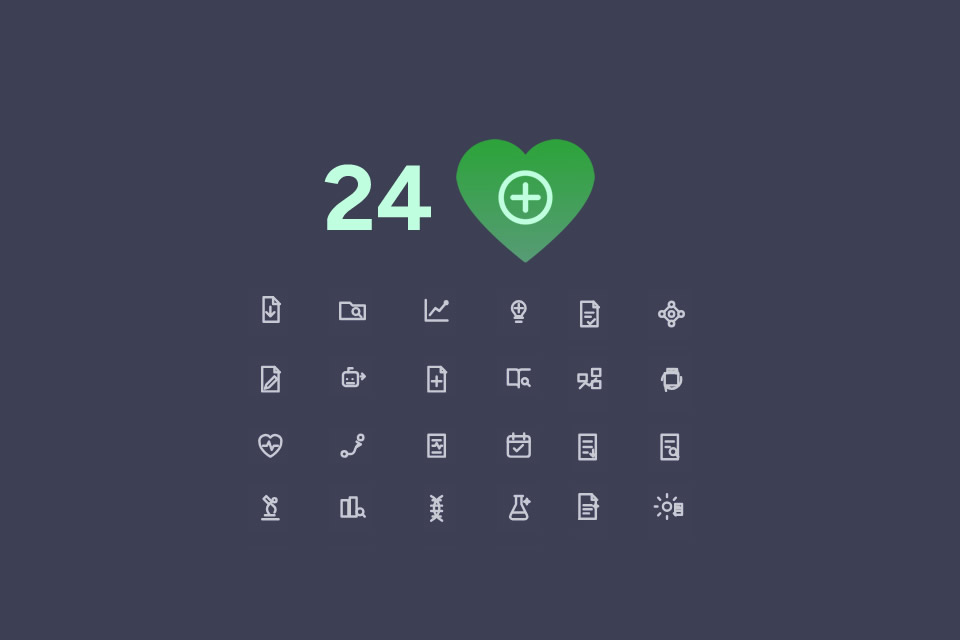
OPTI’s perspective in this article is the integration layer: how AI applications connect safely to existing systems of record, not the development of clinical systems. That’s why we separate healthcare into four major data domains and AI capabilities into six functions, so that the reader sees 24 gaps being filled by AI. Product capabilities and market figures were checked in August 2026.
1. What is common in AI healthcare data integration?
An order-taking agent does not look like a tumour-board assistant, and a molecular-design agent does not look like an invoice processor. Yet the general AI integration pattern in most settings can be described like this:
| Layer and question | Examples and fragmentation |
|---|---|
| System of record Where does the authoritative fact live? | ERP knows the contractual price. EHR knows the medication list. CRM knows the account interaction. The research environment knows the study population. |
| Integration How is that information exposed? | FHIR, DICOM, ERP API, EDI and SQL solve different integration problems. |
| Permission and purpose Who can use the information and why? | Legal and ethical constraints matter here. Primary healthcare use is usually very different from secondary research and innovation uses. |
| Deterministic rules What should not be left to a probabilistic model? | Prices, stock quantities, access permissions and many regulatory or clinical constraints often come from deterministic systems. |
| AI What do we use the intelligence for? | Depending on the domain, the application needs to extract, search, predict, recommend, generate or act. |
| Action & Audit What it can do, and what can be checked? | Human-controlled where consequences are material, otherwise logged and auditable after the fact. |
You can think of all 24 applications below as reducible to one useful flow: System of record > Integration > Permission and purpose > Deterministic rules > AI > Action and audit.
Building integrations is also the basis of our Data & Business Intelligence work
2. The numbers first: a large and fragmented market
Several healthcare technology markets are already measured in tens of billions of dollars. As with most healthcare market estimates, they cannot simply be added together because definitions overlap, but most of them are growing.
| Market | Latest estimate |
|---|---|
| Healthcare customer relationship management (CRM) | $23.15B |
| Healthcare enterprise resource planning (ERP) | $9.0B |
| Healthcare cloud computing | $60.8-74.0B |
| AI in healthcare | $50.7B |
| Digital healthcare supply-chain software | $3.8B |
| Pharmaceutical wholesale & distribution | ~$1T in 2025 |
Healthcare software
Mordor Intelligence estimates healthcare CRM at $23.15 billion in 2026 (Source). Grand View Research places healthcare ERP at around $9 billion and AI in healthcare at $50.7 billion (Source). Healthcare-cloud estimates vary from approximately $60.8 billion to $74 billion depending on market definition (Source 1, Source 2).
Wholesale and distribution
On the commercial side, healthcare supply-chain-management software is estimated at only around $3.8 billion (Source), while the physical pharmaceutical wholesale and distribution market itself is measured above $1 trillion (Source).
A large amount of healthcare commerce therefore still moves through a fragmented digital layer of solutions that includes platforms (ERP, CRM, SFA, WMS), B2B order portals, electronic data interchange (EDI), e-mail and customer-service systems, and so on.
Cloud versus on-prem
IT infrastructure is mixed. Cloud represented an estimated 46.2% of the healthcare ERP market in 2025 (Source), while another study still placed more than half of the market (54.2%) of hospital information systems on-premises (Source).
The architectural pattern is consistent: healthcare is moving toward cloud infrastructure without abandoning its existing systems of record.
2026 changed what AI is used for
This year, the unit of AI implementation has been expanding fast:
| 1. Model | 2. Assistant | 3. Application | Now: Agent |
|---|---|---|---|
| LLM | Chatbot | AI embedded in a workflow | Tool-using action |
Some recent advances include:
- In April 2026, Moderna selected Salesforce Agentforce Life Sciences for global commercial operations (Source). A month later, Salesforce said more than 140 life-sciences organizations were using the platform (Source).
- Veeva now embeds specialised AI functions directly into Vault CRM, including account preparation, voice capture and agentic call reporting (Source).
- Novo Nordisk has documented an Azure reasoning agent operating against more than 200,000 patient-years of harmonised clinical-trial data, expecting it to reduce exploratory analyses from weeks to minutes (Source).
- AWS launched Amazon Bio Discovery in April 2026 with access to more than 40 biological AI models and agentic experiment configuration (Source).
Agentic systems in healthcare and life sciences are moving beyond chat interfaces.
They read from systems of record and, in bounded cases, act back on those systems.
3. Four data domains and six AI functions
As there is no single healthcare database, we can identify four broad domains, usually characterized by their data patterns.
Commercial healthcare data is typically split across customer relationship management (CRM), enterprise resource planning (ERP), warehouse management systems (WMS), sales force automation (SFA) and product information management (PIM) systems. Clinical data lives in electronic health records (EHR), hospital information systems (HIS), laboratory information systems (LIS) and imaging platforms such as picture archiving and communication systems (PACS).
| Domain | Core systems | Typical core data |
|---|---|---|
| Commercial & Distribution | CRM, SFA, ERP, WMS, PIM, e-commerce | customer, SKU, price, stock, order |
| Care Delivery | EHR/HIS, LIS, PACS, devices | patient, encounter, result, image, medication |
| Life Sciences & Research | trials, repositories, omics, literature | study, cohort, target, molecule, experiment |
| Enterprise Operations | ERP, procurement, finance, service | supplier, contract, invoice, asset, resource |
The European Health Data Space reinforces this principle from a governance perspective by separating primary use of health data for care from secondary use for activities such as research and innovation (Source). The EHDS Regulation entered into force in March 2025, although its main operational obligations are being phased in from 2029 onward.
Across these domains, modern AI applications can repeatedly perform at least six functions:
| Function for AI | Role |
|---|---|
| Extract / Understand | convert unstructured inputs into usable data |
| Search / Retrieve | find relevant information |
| Predict | estimate a future state or probability |
| Recommend | rank possible actions or alternatives |
| Generate / Summarise | create structured human-readable output |
| Act / Orchestrate | use systems and tools to perform bounded actions |
That produces: 4 data domains times 6 AI functions = 24 application patterns.
Fragmentation is natural
Healthcare data integration cannot be reduced to one standard: Fast Healthcare Interoperability Resources (FHIR) is not ERP integration. Digital Imaging and Communications in Medicine (DICOM) is not a product catalogue. Customer Relationship Management (CRM) is not clinical history, and a research corpus is not the same as a patient record.
4. The 24 AI applications
By taking the four healthcare data domains and the six intelligent functions, we now map directly the 24 intersections where AI is embedding itself.
I. Commercial & Distribution
| AI function | AI Application example |
|---|---|
| Extract | Order-taking: from Order/PDF/e-mail to structured order |
| Search | Product visibility and account knowledge |
| Predict | Forecasting demand, shortage and reordering needs |
| Recommend | Engine for next-best-product / substitute / recommended action |
| Generate | Optimizations in quoting, call reporting, customer support |
| Act | Agentic order execution with ERP/WMS validation, for example for stock management |
Example: Order-taking, from incoming order to ERP
Orders usually coexist across B2B portals, sales representatives, e-mail, Excel, PDFs and customer service. So the opportunity for medical, dental, laboratory and pharmaceutical distribution is that AI can unify order intake across all of them.
One published medical-device implementation describes more than 50,000 B2B orders per month, previously requiring over 30 people for data entry across orders received by fax, e-mail and portals (Source).
AI can extract the customer, requested products and quantities. But stock, price, contractual discount and credit information still belong in ERP or WMS, as detailed in our hybrid architecture.
This hybrid principle is crucially important with agentic order-taking: AI interprets ambiguity, while the deterministic transactional system remains the source of commercial truth.
The hybrid architecture: AI + deterministic systems
E-mail / PDF / Sales Rep
     ↓
AI interpretation
     ↓
customer + SKU matching
     ↓
ERP / CRM / WMS checks
     ↓
deterministic rules
     ↓
human confirmation
     ↓
ERP order
From CRM data to the next action
The pharmaceutical data architecture in the order-taking example can be reused in the other functions of AI. As an example, Veeva’s current AI capabilities use account history, existing activities and other CRM information to prepare account summaries, call reports and suggested actions for field representatives.
For a distributor, the equivalent questions may be: What does this customer normally reorder? Which substitute did we previously supply? What complementary product is relevant and currently in stock?
In this area, the key is to unite the separate reporting silos so you can build the context for AI.
See the trends for agentic AI in Google Cloud
II. Care Delivery
| AI function | AI Application example |
|---|---|
| Extract | Structuring clinical documents and reporting |
| Search | Retrieval of EHR / guideline / clinical knowledge |
| Predict | Patient risk and outcome prediction under appropriate clinical and legal safeguards |
| Recommend | Assistance with documented clinical workflows |
| Generate | Generating documentation |
| Act | Administrative agents for scheduling and other functions |
Compared with the commercial domain above, clinical AI uses the same six functions against an entirely different system of truth.
Example: Google’s MedGemma
Google’s MedGemma 1.5 supports medical text, structured extraction from laboratory reports, EHR interpretation and multimodal inputs including computed tomography (CT), magnetic resonance imaging (MRI) and pathology imagery.
Google states that MedGemma must be adapted and validated for the intended use before production. Its outputs are not intended to directly determine diagnosis, patient management or treatment, and require independent verification (Source).
The bounded common architecture
trusted clinical sources
     ↓
retrieval + interpretation
     ↓
answer + source context
     ↓
Clinician (human)
The Search function may be more important than autonomy
The case of Seattle Children’s Pathways Assistant is important, because it is documented to use Google’s Vertex AI and Gemini to turn clinical-pathway documentation into a searchable conversational resource. AI helps clinicians find and interpret trusted information, without autonomous decision-making (Source).
In healthcare, most AI projects do not need an autonomous role.
AI generation for human reviewers
HCA Healthcare provides another pattern. Google reports roughly 60,000 nurse handoffs per day across HCA facilities, with the traditional process consuming around 40 minutes per shift (Source).
Generative AI can organise EHR information into a handoff draft that remains subject to nurse review.
Microsoft’s Dragon Copilot applies the same principle to ambient documentation, referral letters, after-visit summaries and structured clinical documentation (Source).
This may explain why documentation is one of the most mature generative-AI categories in clinical care: there is a clear source of truth and a human reviewer.
III. Life Sciences & Research
| AI function | AI Application example |
|---|---|
| Extract | Structuring scientific and trial data |
| Search | Discovery of scientific literature and cohorts |
| Predict | Prediction for therapies and molecules |
| Recommend | Prioritisation of candidates / experiments |
| Generate | Drafting protocols and regulatory documents |
| Act | Multi-tool research agents in all phases |
In research, the word “agent” takes on a more substantial meaning, since the purpose is to go beyond search and actually formulate new hypotheses.
Research agents can justify greater computational autonomy
Google’s life-sciences R&D framework combines MedGemma, TxGemma, Gemini and specialist scientific tools across target identification, candidate generation, computational evaluation and refinement (Source).
Amazon Bio Discovery similarly combines biological models, experiment design and laboratory validation (Source).
The architecture of AI scientific autonomy
A research agent goes beyond retrieval by coordinating literature, datasets, code, and other tools to propose candidate hypotheses, molecules or designs.
research question
     ↓
agent
     ↓
literature + datasets
+ code + models + tools
     ↓
proposed new results
     ↓
Science team review
Prediction and recommendation become separate steps
The prediction function might estimate a molecular property. Then the recommendation function asks: Which candidate deserves further testing? And that second decision includes scientific priorities and experiment cost, not only model output.
AWS has documented work with Memorial Sloan Kettering using Bio Discovery for de-novo nanobody design against a rare-cancer target (Source).
Novo Nordisk provides the example of its Azure reasoning agent operating on a harmonised proprietary clinical-trial environment. It can generate code and perform statistical analyses, with validation built into the scientific workflow (Source).
Thus, AI agents for research combine increasing computational autonomy with explicit scientific review.
IV. Enterprise Healthcare Operations
| AI function | AI Application example |
|---|---|
| Extract | Processing invoices and other documents |
| Search | Knowledge of contract, standard operating procedure (SOP) and operations |
| Predict | Evaluating risks for inventory, capacity, operations |
| Recommend | Replenishment, sourcing and resources |
| Generate | Drafting administrative and operational documents |
| Act | Procurement and workflow AI agents |
These enterprise use cases are less spectacular than drug discovery or clinical AI, but they often target high-volume processes with measurable financial returns.
The fast financial returns of boring AI
Healthcare organizations still process vast amounts of documents. Cleveland Clinic’s supply-chain director told Business Insider that it uses document recognition and AI to turn information received from medical-supply representatives into ERP requisitions rather than manually entering all fields (Source).
Rush University Medical Center has discussed AI in contract-management and supply-chain workflows, while several leading US health systems are using advanced analytics and AI to improve shortage and inventory visibility (Source).
We use an agentic middleware as intelligence layer in our AI Sales 2.0 platform
The symmetric architecture in enterprise document processing
CUSTOMER SIDE                    SUPPLIER SIDE

customer PO                      supplier document
     ↓                                ↓
AI extraction                    AI extraction
     ↓                                ↓
sales rules                      procurement rules
     ↓                                ↓
ERP order                        ERP requisition
The diagram shows that the underlying AI function in the enterprise domain is nearly identical, with the directions reversed. This explains the popularity of AI in this domain.
5. Where should the 24 applications run?
We have seen that hybrid cloud deployment remains mixed, and now we understand why. A medical distributor may keep a mature ERP on-premises and expose selected APIs to an AI order layer. A hospital may keep imaging or EHR infrastructure local while using cloud AI for document processing or retrieval.
A research organisation may require large temporary cloud compute capacity even while other corporate systems remain private. AI functions such as retrieval-augmented generation (RAG) are often deployed in cloud or hybrid environments, depending on data, security and model requirements.
Hybrid architecture is a consequence of healthcare data fragmentation
ON-PREMISES / PRIVATE                         CLOUD
──────────────────────                  ──────────────────────
ERP / WMS                                Analytics
EHR / HIS                                Data warehouse
PACS / imaging                           Search / RAG
Laboratory systems                       AI endpoints
Devices                                  Research compute
Local databases                          Agent orchestration

               \                              /
                \                            /
                 CONTROLLED INTEGRATION
                          ↓
          identity + permissions + audit
Cloud is just a location for executing the functions of AI, not a healthcare-specific technology. Fragmentation is therefore likely to persist even as AI makes workflows across those systems more unified.
Three cloud approaches
All three hyperscalers expose specialised healthcare building blocks.
| Function | Google Cloud | AWS | Microsoft Azure |
|---|---|---|---|
| Clinical data | Healthcare API: FHIR, HL7v2 | HealthLake | Health Data Services - FHIR service |
| Imaging | Healthcare API / DICOM | HealthImaging | Health Data Services - DICOM service |
| Research / omics | BigQuery, Vertex AI, specialised models | HealthOmics, Bio Discovery | Azure data & AI services |
| AI | Gemini, MedGemma, TxGemma | Bedrock + biological models | Foundry, Dragon Copilot, agent orchestration |
Some details:
- Google’s stack offers healthcare interoperability with broader data and AI platforms. FHIR data can flow from Cloud Healthcare API into BigQuery, while MedGemma and TxGemma can run locally, in batch or through Vertex AI endpoints (Start here).
- AWS separates clinical, imaging and omics data into specialised services and has moved strongly toward a packaged research environment with Bio Discovery (Start here).
- Microsoft combines FHIR/DICOM infrastructure with vertical workflow products such as Dragon Copilot and multi-agent accelerators such as Healthcare Agent Orchestrator (Start here).
The architectural decision belongs to the organization. What data does the application require, where is its authoritative source and what is the AI actually allowed to do?
A healthcare data integration architecture should connect each AI application only to the systems and data required for its purpose.
Conclusion: fragmentation may be an advantage
Healthcare software fragmentation is normally treated as technical debt, and maybe some of it really is. But this article argued that it reflects legitimate distinctions between purposes, basic data entities and applicable regulation.
AI may have the capability to work across the fragmentation boundaries more naturally than traditional software, but the boundaries themselves are still there. So we should not expect one healthcare AI connected indiscriminately to everything.
The 24 apps sketched show a portfolio of specialised applications and agents that can be connected to the minimum data and tools required for each purpose.
The compounding effect comes from building many specialised AI applications on reusable integrations.
OPTI develops custom software, CRM and ERP integrations, data applications and AI automation around existing systems.
We are a Google Cloud Partner and HubSpot Solution Partner, and we are ISO 27001 and ISO 9001 certified.