
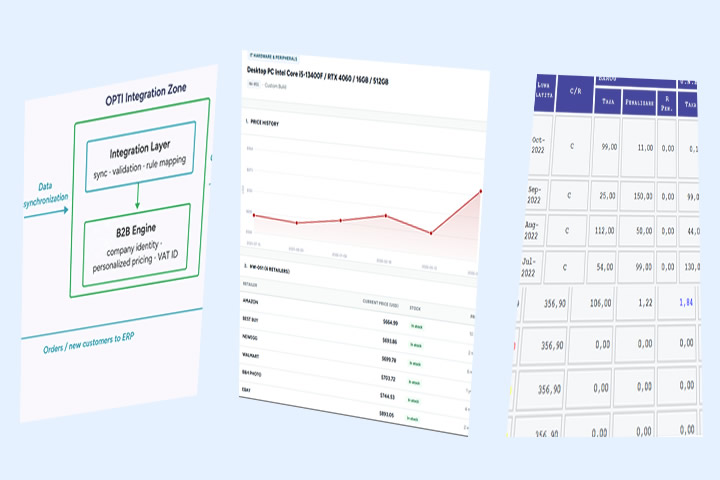


In many companies, the priority is not replacing existing systems, but connecting them correctly: ERP, eCommerce site, other internal applications and AI services need to work together.
In recent months we published three OPTI case studies illustrating this approach, which we invite you to read below.
In all three cases, the new applications had to comply with the business rules and processes already in place at the beneficiaries.
1. B2B eCommerce portals integrated with ERP
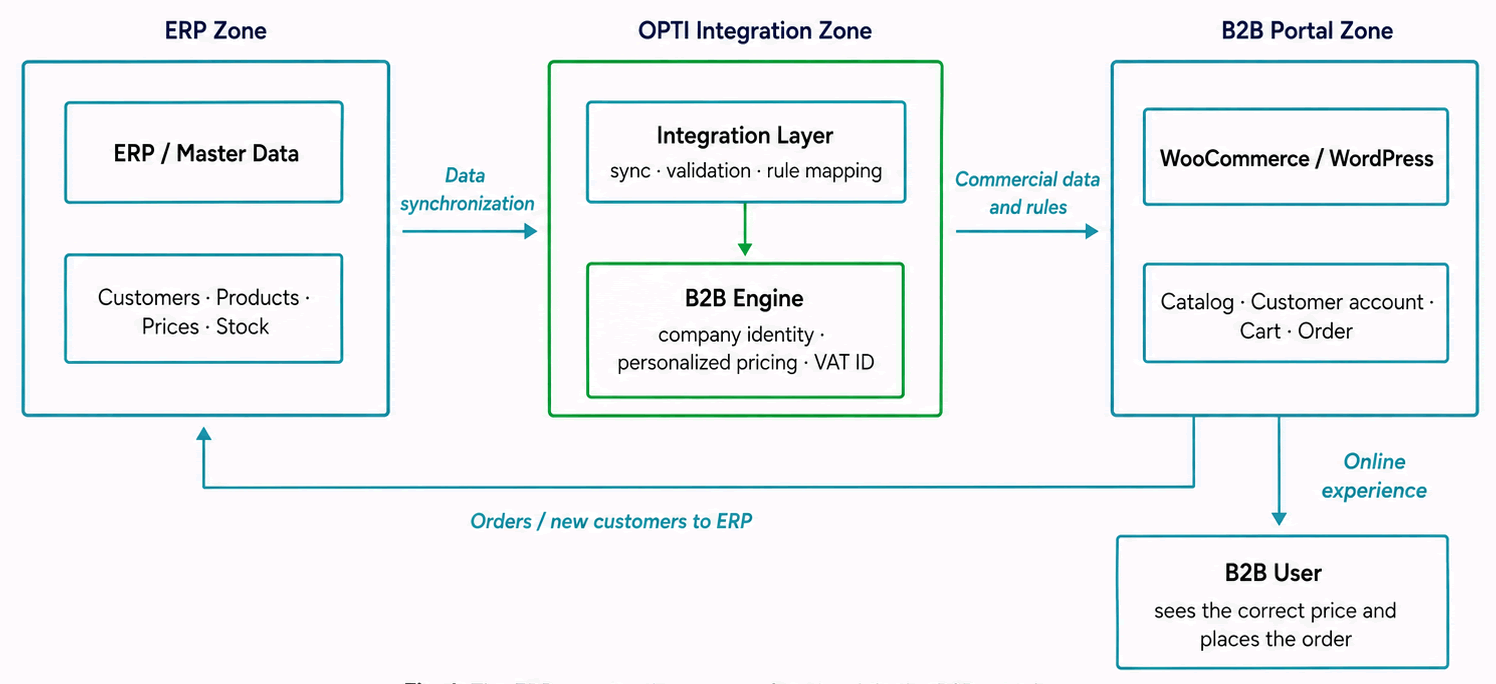
For three companies in manufacturing and distribution, OPTI developed B2B portals in WooCommerce (Wordpress) integrated with the SocrateCloud and Pluriva ERPs.
The ERP remains the primary source for products, stock, customers, prices and commercial terms. The portals automatically apply prices and discounts for each customer and synchronize the necessary data with the ERP.
The integration includes synchronizing products with subvariants, identifying companies by tax ID (CUI), and transmitting orders to the ERP systems.
The three implementations synchronize over 5,000 B2B customers and process over 1,000 B2B orders monthly.
Read the case study: B2B eCommerce portals integrated with SocrateCloud and Pluriva
2. Price Intelligence for price and stock monitoring
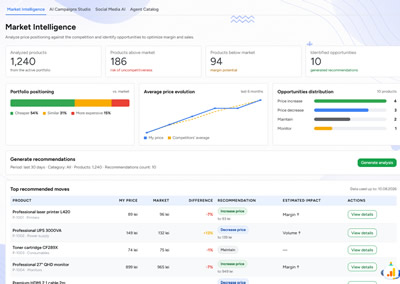
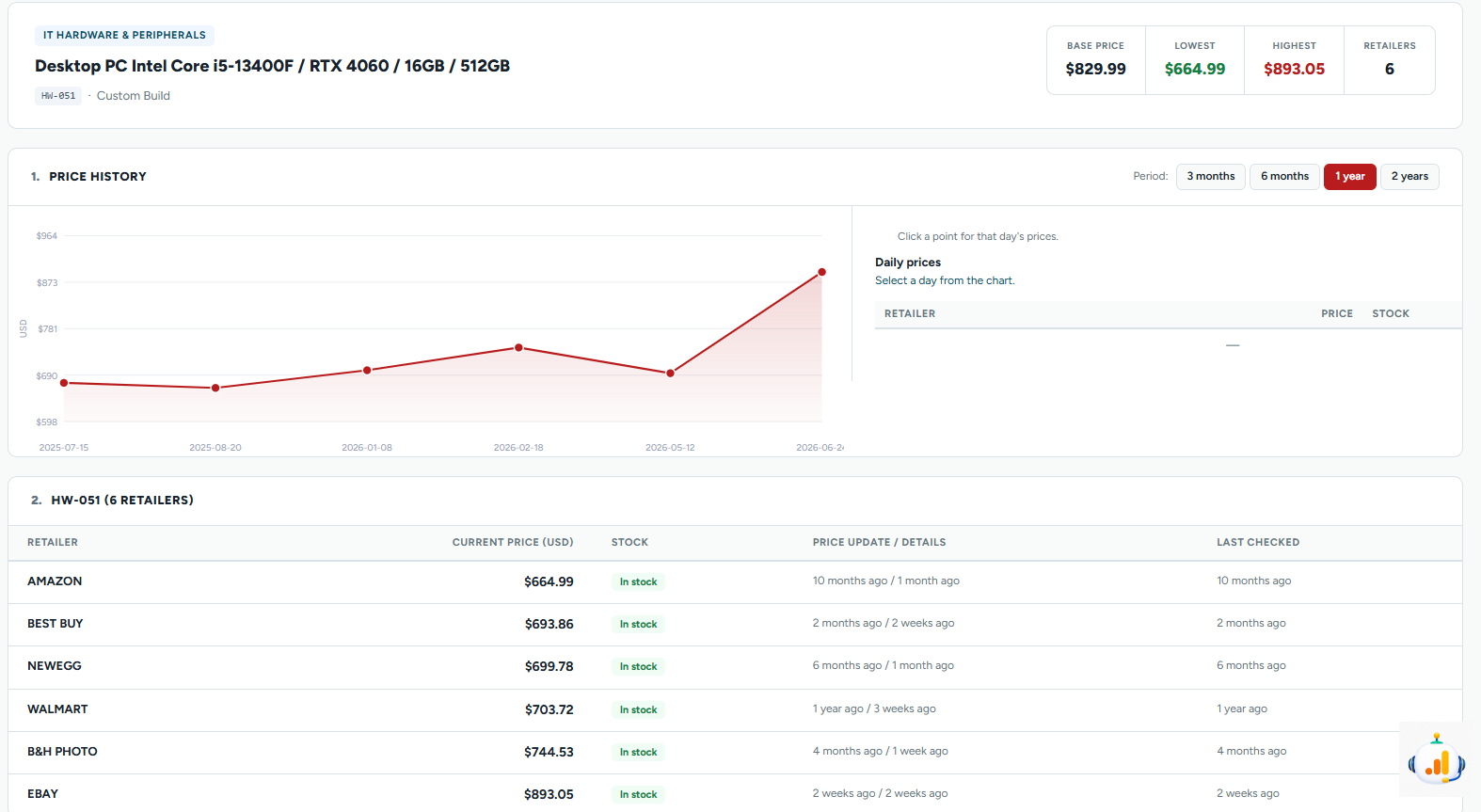
For an eCommerce client, OPTI developed an application that centralizes prices and product availability from multiple retailers and suppliers.
The data is collected and stored in a single data warehouse, and users can track price and stock history, configure alerts and analyze product positioning in the market.
The application uses Google Cloud: Google BigQuery for data storage and analysis and Google Gemini with Conversational Analytics for natural language analysis features.
After two months of operation, the system was monitoring approximately 2,000 products from 20 sources. The time required for pricing analysis was reduced by an estimated 50%.
Read the case study: Price and stock monitoring through a Price Intelligence application
3. Accounting and financial reporting software: rescheduling module
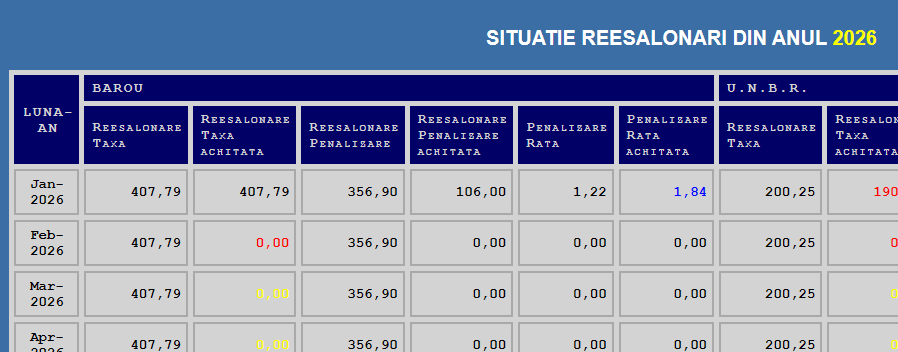
For the Bucharest Bar Association, OPTI develops and maintains an accounting and financial reporting application that manages obligations, payments, penalties, exemptions and reports.
A new requirement was introducing the ability to reschedule historical debts, without creating a separate financial system.
The implemented module allows transforming existing debts into future installments and correctly distributing payments. The reports differentiate current debts from rescheduled ones and preserve traceability of individual payment allocation, without modifying the existing accounting flows.
Read the case study: Advanced accounting and financial reporting software
Integrating applications without parallel systems
The three projects shared the same essential technical requirement: the new features must work with the systems and data already used by the company.
In the B2B portals, the ERP remains the primary source for commercial data. In the Price Intelligence application, information from multiple sources is normalized into a common model. In the financial system, the new rescheduling rules are integrated into the existing accounting logic.
Want to integrate a CRM like HubSpot with an on-prem or cloud ERP?
Already using Google Cloud and looking for an implementation team?