


OPTI Clients

 Hervis Sports
 Pluxee


 INSMC
 Old Prints
 Zentiva
 Origin Data
 Winmasters
 CNAS
 ART

Where content consumption gets stuck
The content is rich, but hard to manage
The user experience does not reflect the complexity
The platform has to be connected, not isolated
In education and publishing, quality content is the product being sold
An LMS is not just a list of courses. A digital library is not just a collection of files.
Users need progress, search, assessment, access, recommendations and continuity between sessions. The organization needs administration, rights, reporting and integration.
The architecture has to meet both needs while offering the user a fundamentally simple experience.

One unified experience
We separate content from presentation, access rights and user data. The platform orchestrates a smooth experience regardless of the systems behind it.
- Content/CMS holds the materials
- The identity and permissions system controls access
- The LMS tracks progress, assessment and certification
- CRM/eCommerce/payments connect through integrations
- Search and AI can work on top of the content offered
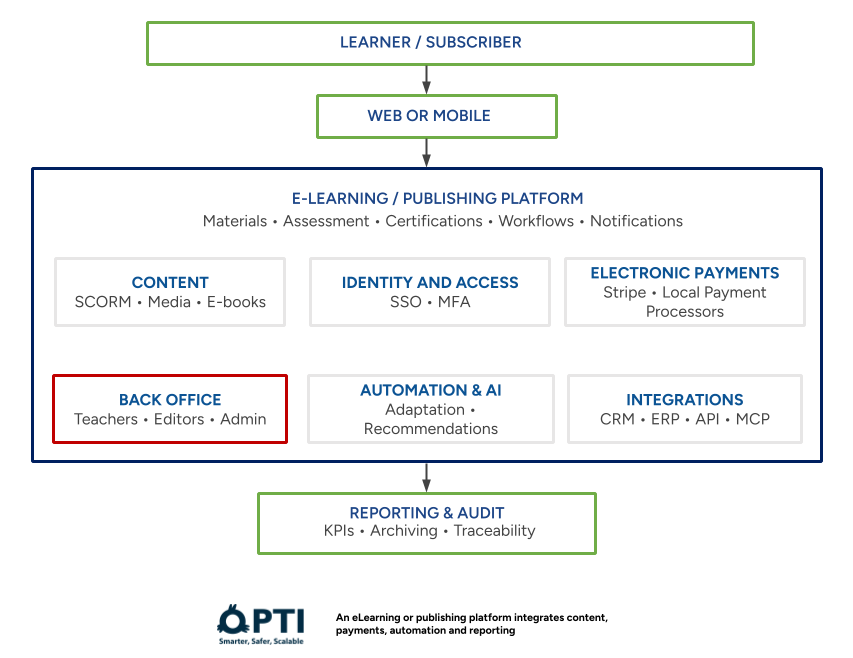
Content protection with accessibility for the customer
The DRM, identity and access rights system has to work without turning access to content into a technical process.
In eLearning, administrative control has to stay in the background, so the student can be immersed in the platform's materials.

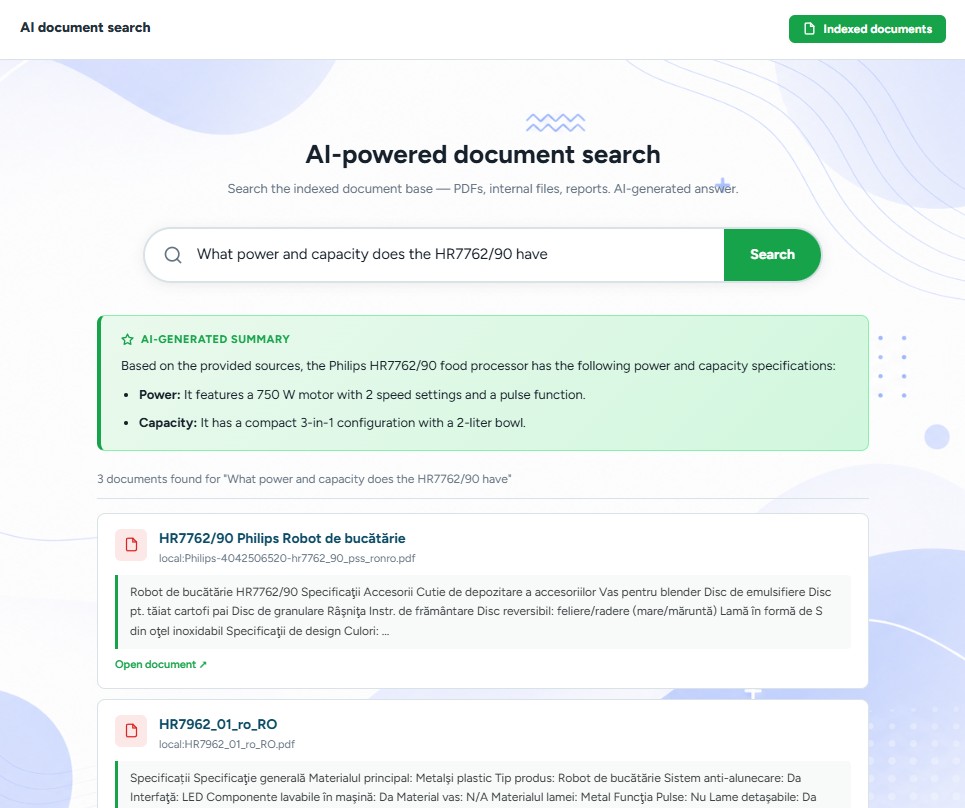
What do the Document AI module and ongoing support look like?
- semantic search across relevant documents and collections
- answers tied to real sources and passages
- support for knowledge bases, resources or educational materials
- controlled access and separation between collections
- chatbot for support and onboarding
Relevant services
Data, Analytics & AI
Security and infrastructure
Success Stories
 Case Study: AI-Ready Infrastructure (Web, Email, Sales)
 Case Study: Protecting Digital Books with Readium DRM
How we work
Users and content
Platform and architecture
Build & content flows
Integrations and protection
Launch & adoption
Three ways to modernize the content platform
| Connect the platforms | Add search & AI | Adopt your own platform | |
|---|---|---|---|
| Best for | LMS, CMS, catalog and identity are separate | Content exists, but is hard to find or reuse | Standard products do not support the editorial model |
| What we keep | The existing LMS/CMS and content | Existing content and rights | Content and editorial processes |
| What we add | SSO, APIs, sync, payments | Hybrid search, chatbot, tagging, document AI | LMS, publishing platform, E-Reader, public portal |
| First outcome | One single flow for users and content | Content found and used more efficiently | Your own experience, controlled end-to-end |
| Typical example | LMS ↔ CMS ↔ user management | Assistant over the library/courses | eLearning or content publishing platform |
The "Recommendations, Upsell, and Rules" guide
Receive the material
Fill in the form and we will send the material to your email.
What our clients say


Quick Questions
What is an LMS platform and why do I need one?
An LMS (Learning Management System) is a software platform that allows you to administer, deliver, and track online courses. It is essential for providing a structured, interactive, and measurable learning experience.
Do you offer Moodle-based solutions or build custom platforms from scratch?
We offer both. We can customize and implement solutions based on open-source platforms like Moodle, or we can build a completely custom LMS platform from the ground up, tailored perfectly to your needs.
How do you protect video content and course materials from unauthorized access?
We implement advanced security solutions, including DRM (Digital Rights Management) like Readium LCP, watermarking, and strict access controls to protect your intellectual property and prevent unauthorized distribution.
Can the e-learning platform be integrated with other systems, like a CRM?
Absolutely. We integrate e-learning platforms with CRM systems like HubSpot to track the customer journey, automate communication, and measure the impact of training on business goals.
Relevant Insights & Guides


