



Why build an AI application?
Applications are defined by the business task and the data required for the task. Most fall into six AI functionalities:
| Functionality | The AI Advantage | Typical application |
|---|---|---|
| Extract / Understand | Transform data into useful information | PDF, email, image or voice reading |
| Search / Extract | Find the information in any of the company's sources | Support, product or document search chatbot |
| Forecast | Estimates a future state or probability | Demand forecast, inventory forecast, risk forecast |
| Recommend | Identify possible actions or options | Next-best-action, product recommendation |
| Generate | Quickly produce a business deliverable | Offers, reports, summaries, e-mail messages |
| Act / Orchestrate | Perform limited actions with auditing and verification | Create order, create appointment, create document |
An application can combine several functions. For example, the OPTI platform AI Sales retrieves an incoming request, accesses customer and product data, recommends a package and, finally, prepares an order in the ERP system.
The "AI Architecture for B2B in 2026" presentation
Receive the material
Fill in the form and we will send the material to your email.
10 AI applications for B2B sales
The following ten applications focus on the sales domain, based on company data from ERP, CRM, or e-commerce systems.
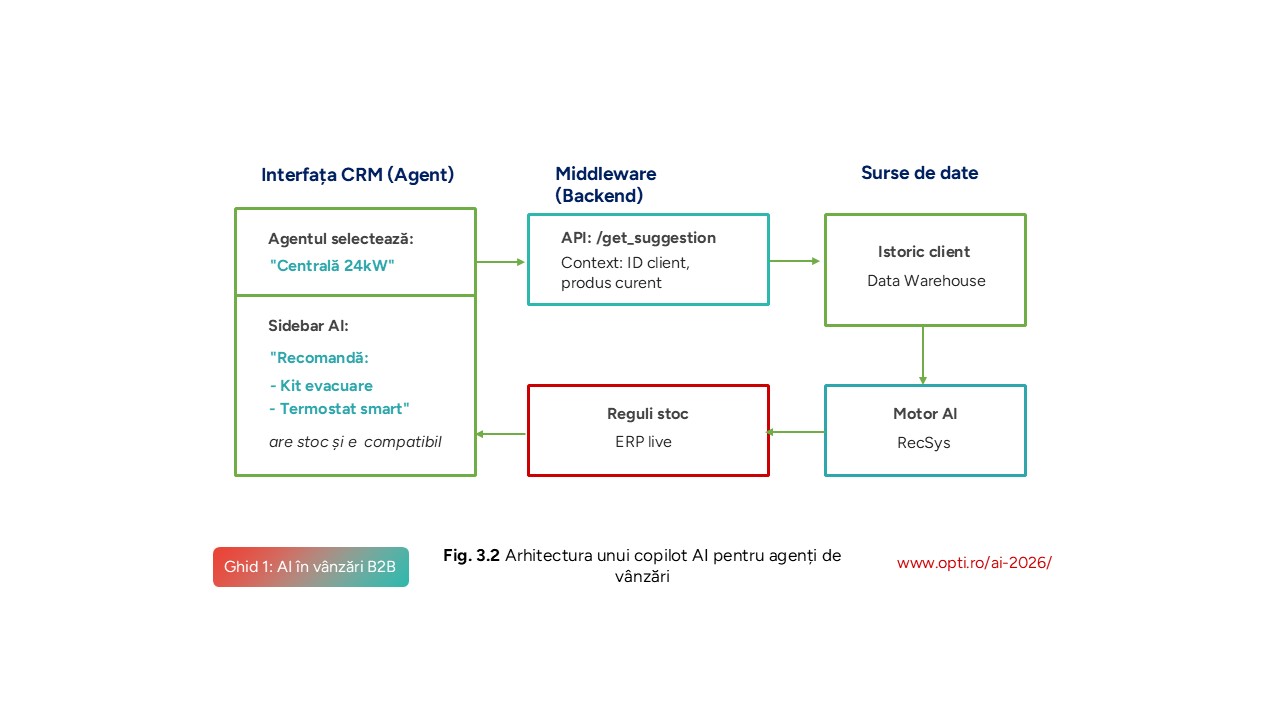
Copilot for Sales Agents
Side panel in CRM or ERP, or overlay over Windows ERPs (e.g. Winmentor).
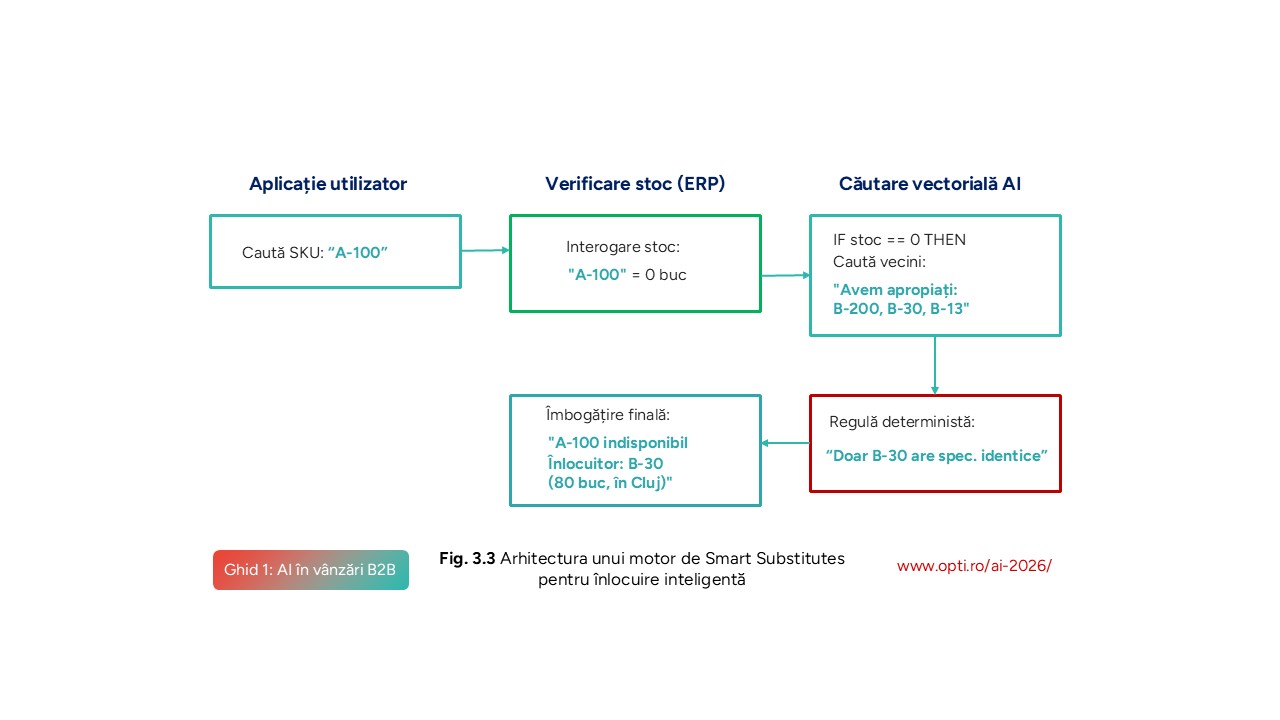
Smart Substitutes Engine
Product substitution when out of stock, for faster rotation or delivery from a single location.
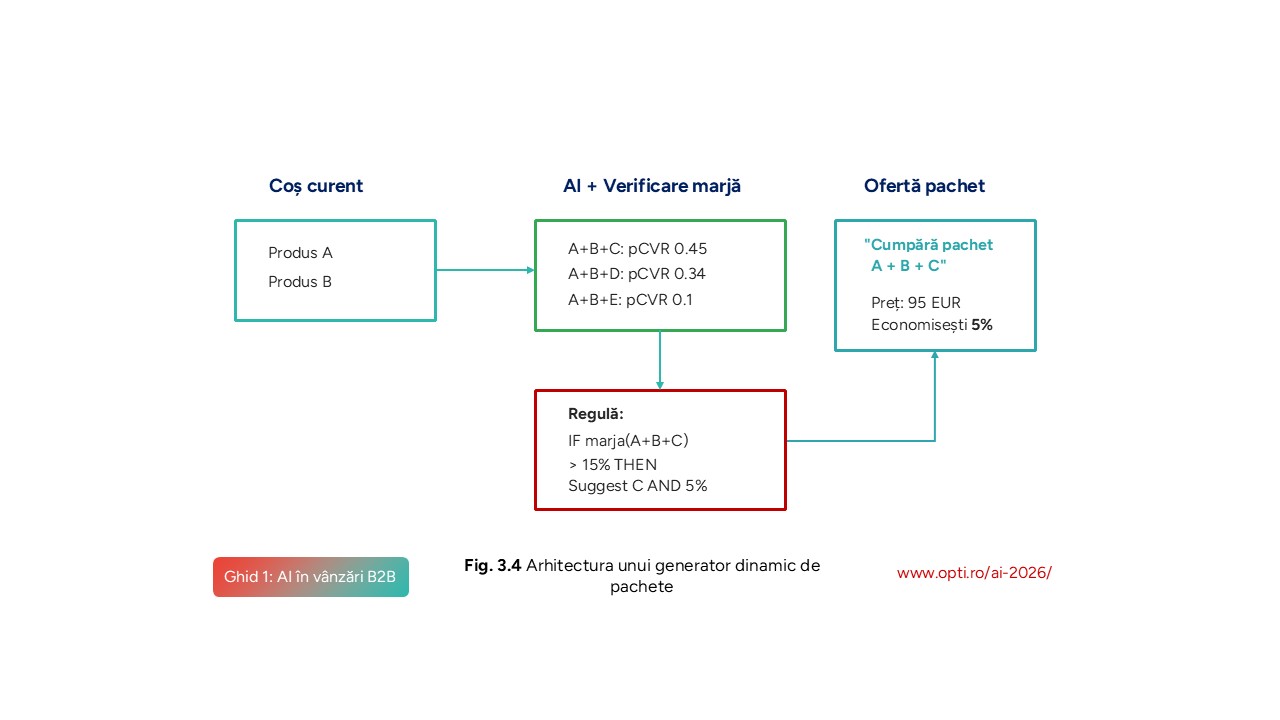
Dynamic Bundle Generator
Creating dynamic bundles to increase rotation without destroying product positioning.
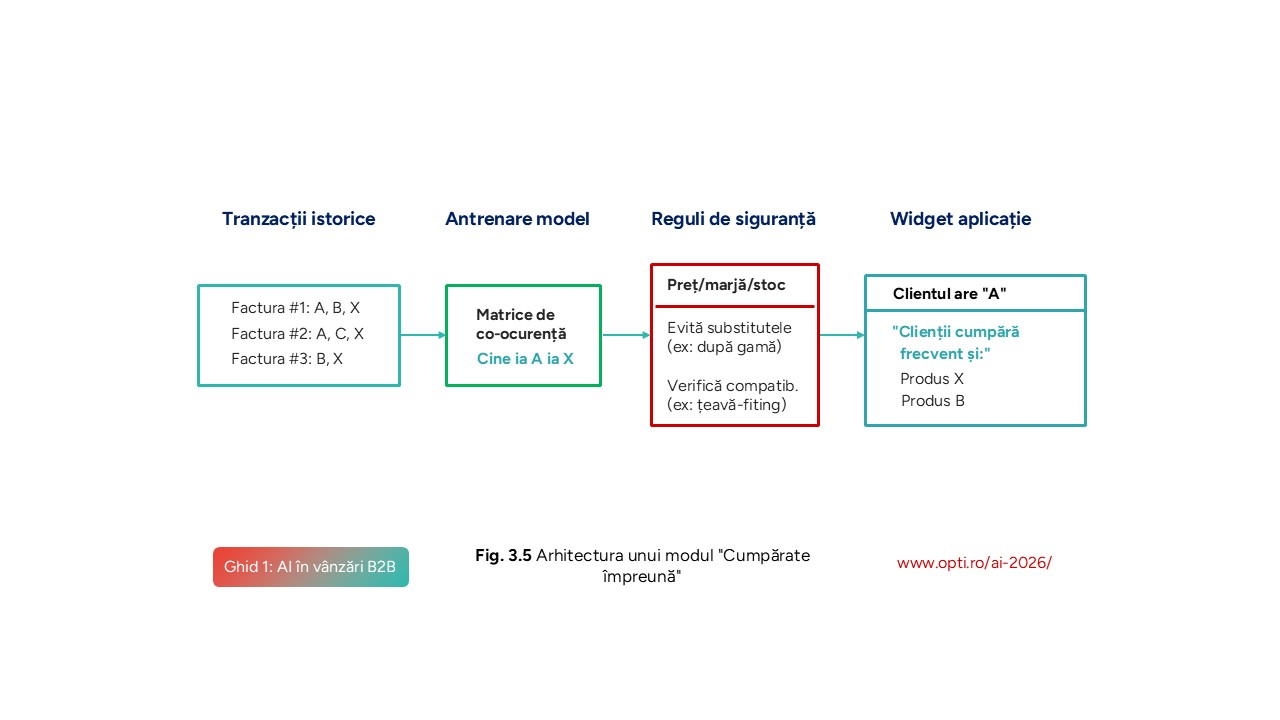
Bought Together Module
The classic “Customers who bought this also bought...”, calibrated for B2B.
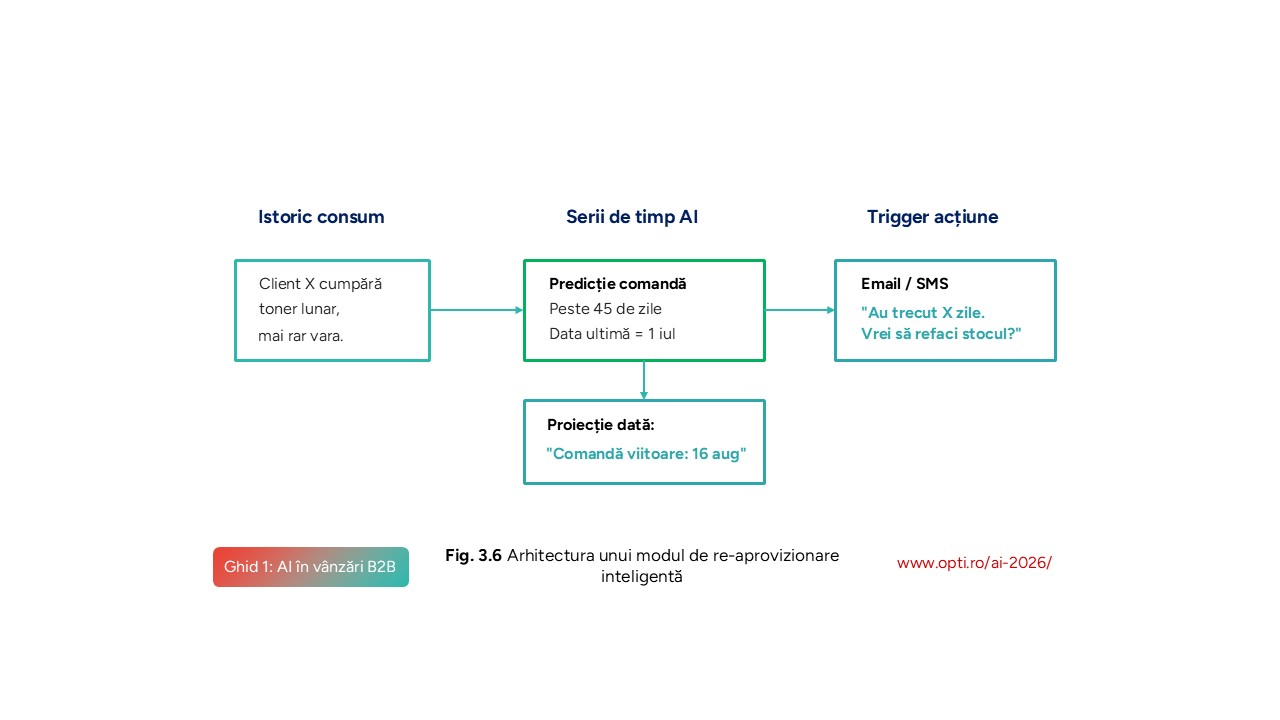
Smart Replenishment
System that learns each client’s consumption cycle and proposes replenishment.
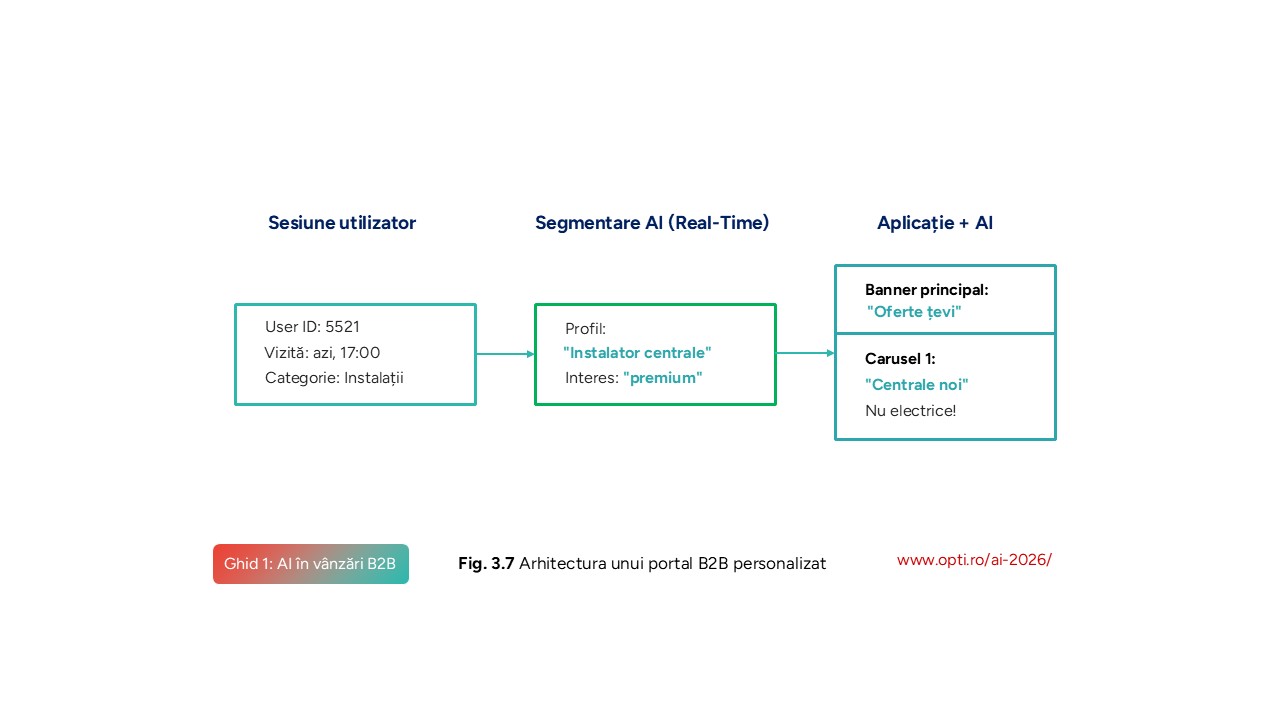
Netflix-style B2B Portal
Netflix-style page hyperpersonalization for displaying brands or news of interest to each client.
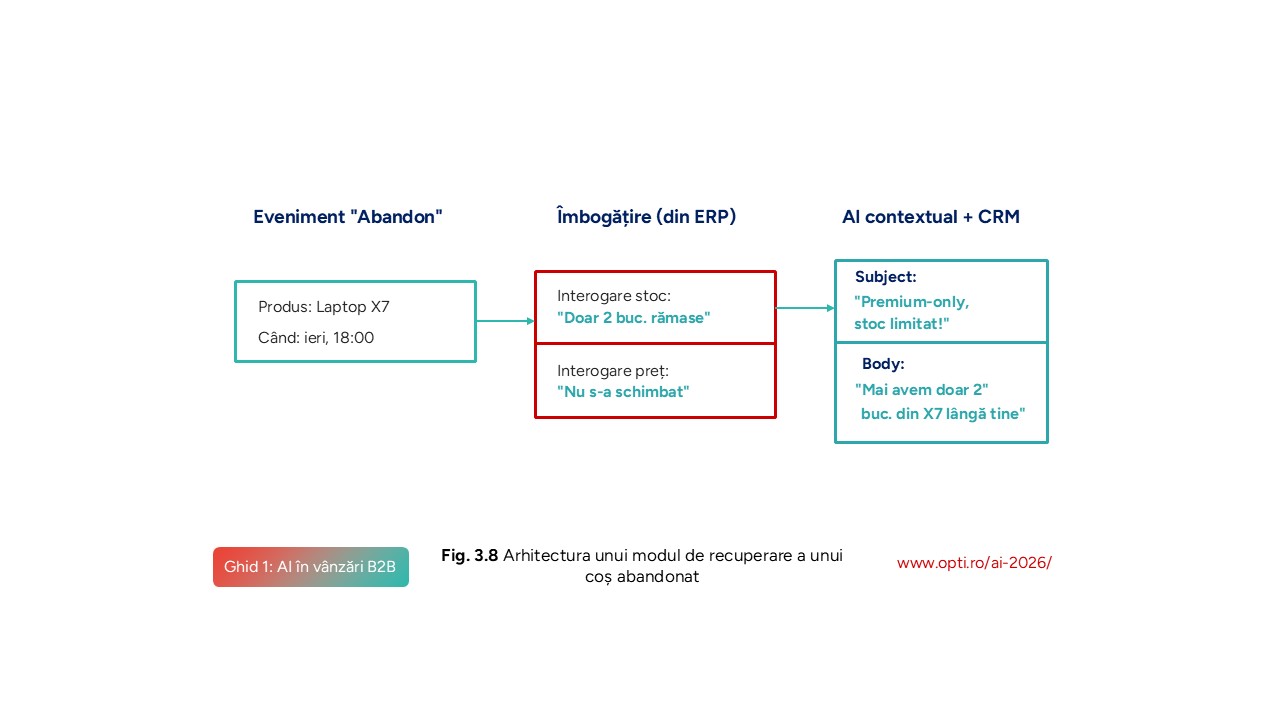
Contextual Abandoned Cart Recovery
Using B2B information about stock, terms, technical sheets and logistics in buyer relations.
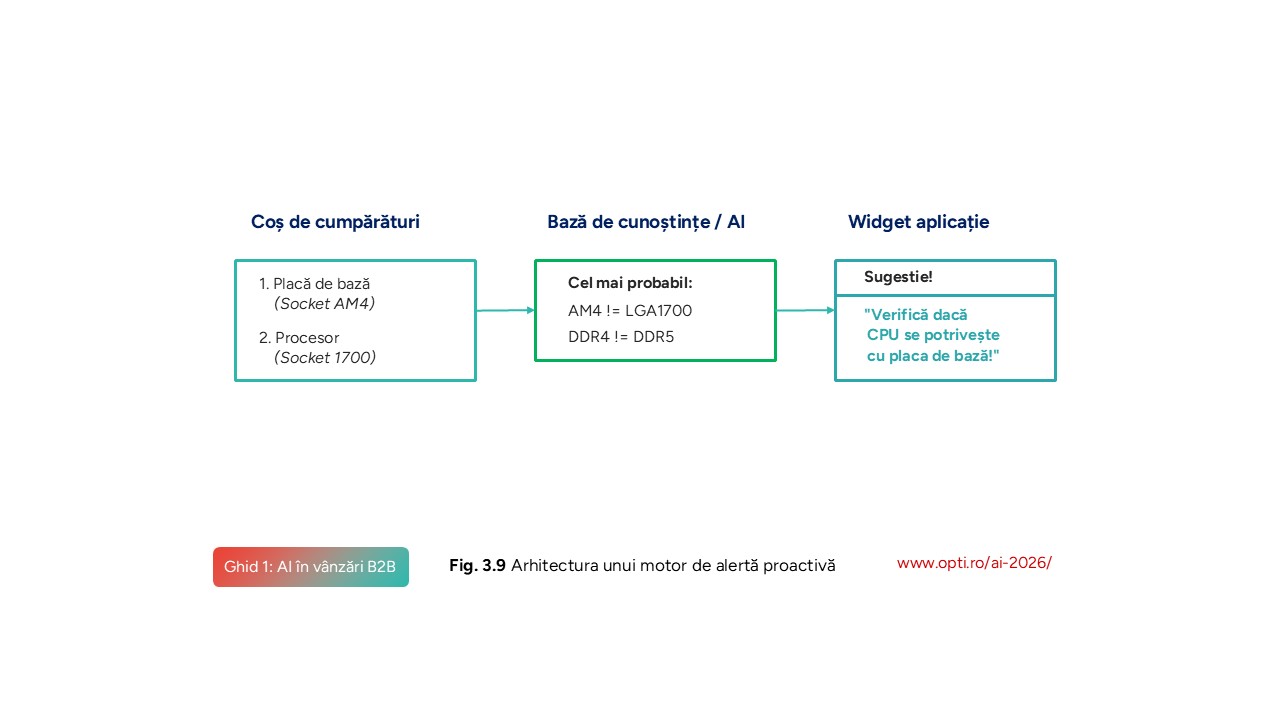
Proactive Alert Engine
Preventing the sale of incompatible products, through deterministic rules or high-confidence AI recommendations.
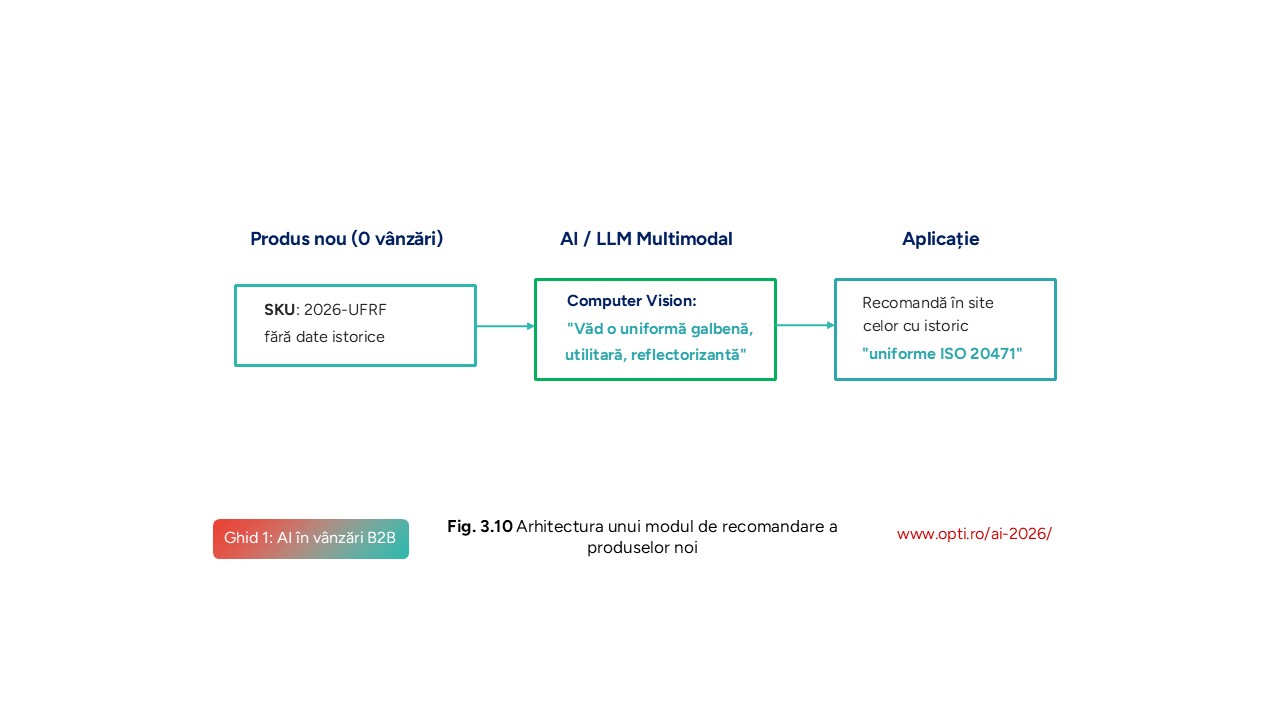
New Product Recommendation Engine
Critical for domains with large catalogs and frequent launches (e.g. IT, fashion, DIY), so new products don’t die on page 50+.
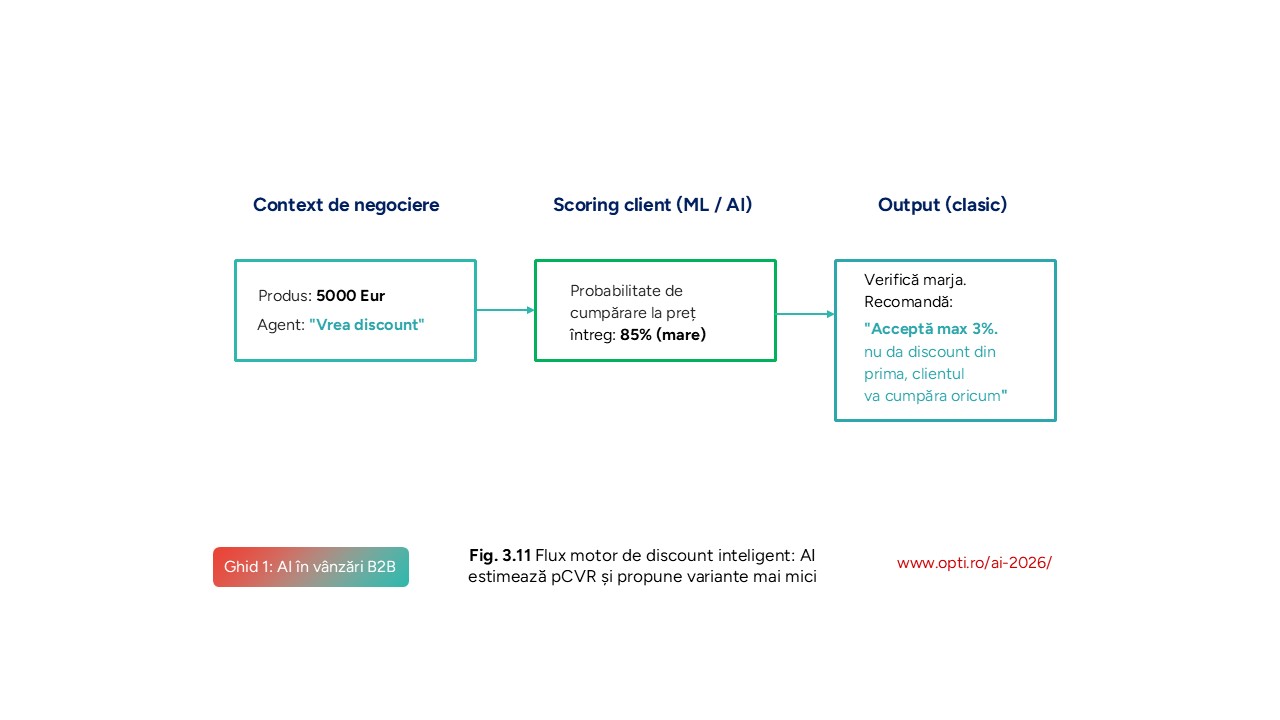
Discount Intelligence Engine
Recommends the optimal discount range to close the sale, Uber-style.
Examples of real-world use cases
These examples are projects implemented by OPTI and documented by Case Studies.
Result: 68% faster quote preparation.

Twenty years in the software industry





AI Application Library
We have documented what applications can be built, based on information available in the industry.
The most urgent questions
If you want to integrate AI into an application, these three questions will help you figure out where to start:
Business objective
Required data and integration complexity
Risks and limitations
Guides for the hybrid architecture
Our series “AI Architecture 2026” examines the technical components required for AI applications.
Recommendations, upsell and rules
KPI: +20% increase in AI-assisted sales.
Integrating exact data with AI (RAG)
KPI: 94% of hallucinations avoided in RAG.
Input processing: text, voice, photo
KPI: <5 sec to transcribe 50 products from an image.
Hybrid search & assistants (chatbots)
KPI: -90% no-result searches.
Continuous optimization and learning
KPI: 2.5x scaling speed.
Security, audit and standards
KPI: 0 detected deviations from company policy.