


OPTI Clients

 Hervis Sports
 Pluxee


 INSMC
 Old Prints
 Zentiva
 Origin Data
 Winmasters
 CNAS
 ART
Where would you like to start?
Where efficiency can grow
The plan and reality drift apart
Operational data stays fragmented
Decisions are made after the data arrives
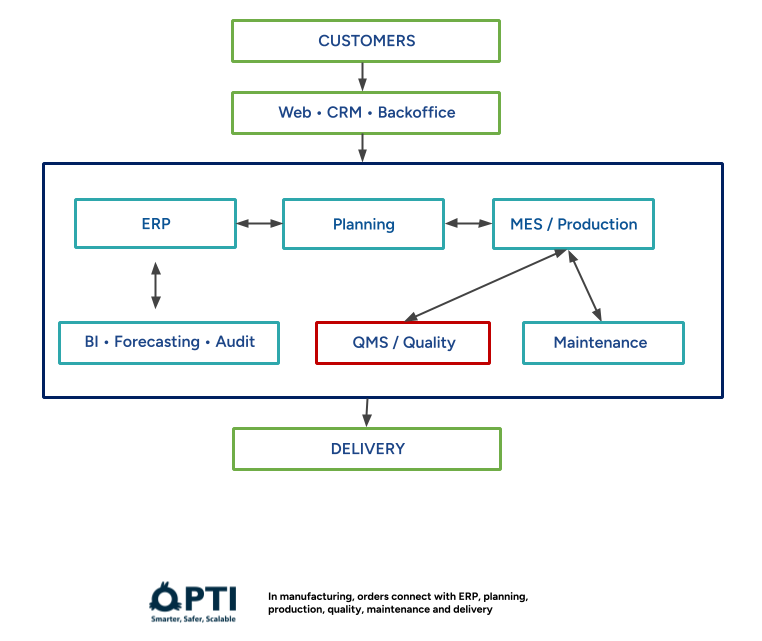
In manufacturing, a single KPI includes data from several platforms
The order is in the ERP. The production plan may be in a separate module. Actual execution comes from the production system or even from intermediate files. Quality and maintenance can also be separate.
That is why simply building a dashboard does not solve the problem of correlating data.
The first step is to establish which events exist for “produced” / “completed” / “delayed” / “available for production” and which system provides each piece of information.
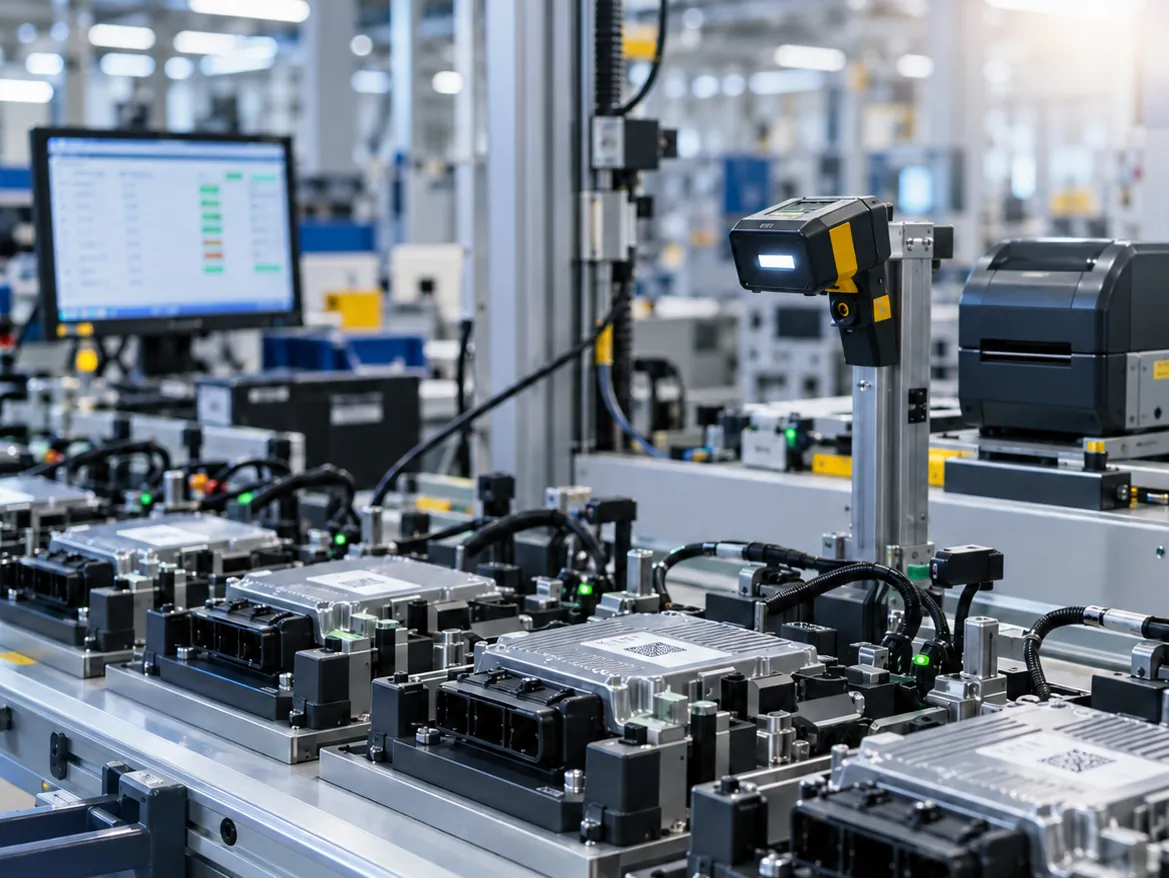
We add intelligence on top of existing systems
The ERP remains the commercial and financial source. Operational systems hold the reality of production. An integration and data layer puts them in a shared context for BI and forecasting.
AI can be introduced only for intelligent recommendations. Quantities, approvals and critical rules remain controlled by deterministic systems.
- ERP and operational systems remain authoritative
- Production events are reconciled into a shared model
- BI and forecasting work with auditable data
- AI does not replace production rules
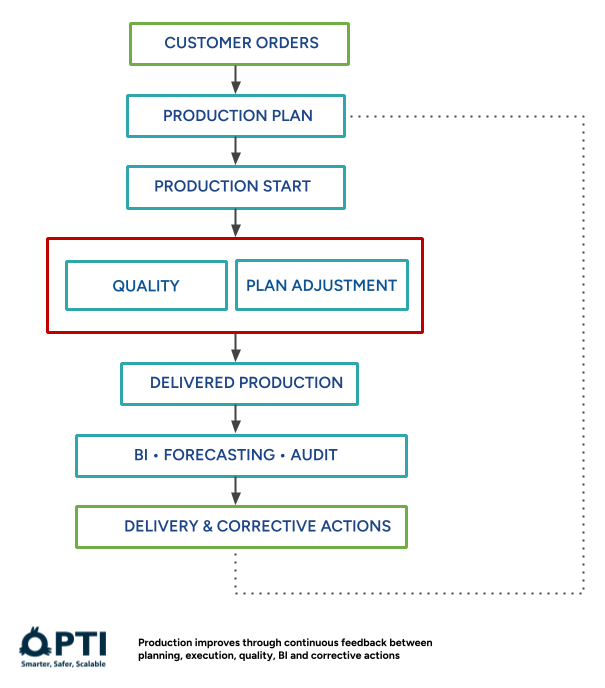
AI can complement existing deterministic processes
Forecasting algorithms anticipate production requirements. Document AI can structure orders or forms. An AI agent can flag anomalies as they appear.
But technical details, rules and approvals remain verifiable and accurate.
In manufacturing, a hybrid architecture keeps a clear separation between AI predictions and the company's controls.
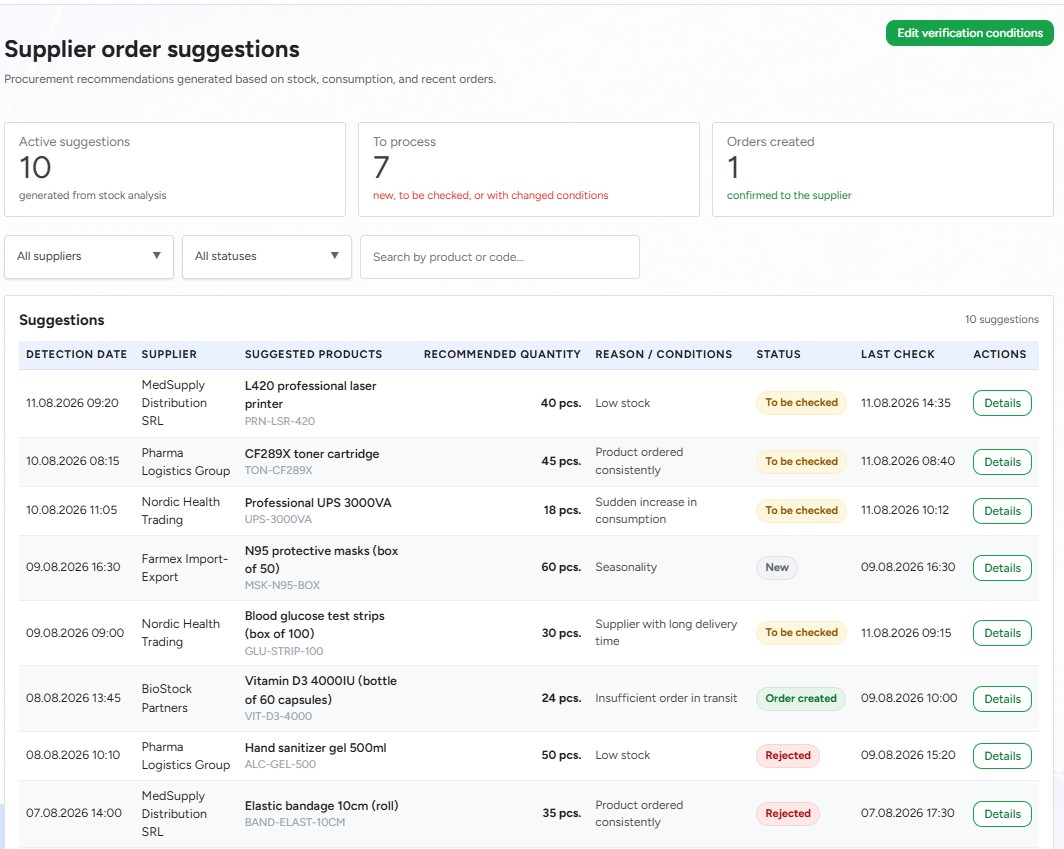
What does the stock and demand forecasting module look like?
- visibility into stockout risk
- correlation between forecast, stock and lead time
- procurement rules and controlled exceptions
- recommendations prepared for review
- support for supplier orders
Relevant services
Data, Analytics & AI
Software & Modernization
Automation & AI Agents
Success Stories
 B2B eCommerce Portals Integrated with SocrateCloud and Pluriva
 Case Study: Accounting and Advanced Financial Reporting System (Rescheduling Module)
How we work
Process and KPI
Systems and events
Model and pilot
Integration and launch
Measurement and expansion
Three ways to modernize production
| Connect your operations | Add analytics & AI | Build operational software | |
|---|---|---|---|
| Best for | ERP, production and quality systems are separate | Data exists, but decisions are reactive | Processes depend on Excel or rigid software |
| What we keep | ERP, MES/QMS and existing equipment | Operational systems and data | Equipment and core systems |
| What we add | APIs, production data, synchronization | Forecasting, anomalies, planning, document AI | Applications for quoting, production, quality or service |
| First outcome | Shared visibility into orders and production | Agreed operational KPIs | An end-to-end digitized workflow |
| Typical example | ERP ↔ production ↔ quality | Sales forecast → production forecast | Configuration and planning application |
The "Recommendations, Upsell, and Rules" guide
Receive the material
Fill in the form and we will send the material to your email.
What our clients say



Quick Questions
How can we integrate ERP, MES and production systems without shutting down the factory?
OPTI can connect ERP with MES, QMS, maintenance applications and other data sources through APIs, connectors or data pipelines. Integration is implemented in stages, with testing and validation to reduce operational risks.
How can AI improve production planning and procurement?
Forecasting models can analyze orders, material consumption, inventory and production history to estimate future requirements. Recommendations are aligned with business rules and can be validated by planners before execution.
Can we obtain real-time reporting from ERP and industrial systems?
Yes, depending on data accessibility and existing system capabilities. OPTI can build integration pipelines, data warehouses and BI dashboards covering production, quality, inventory, costs and delivery schedules.
Do we need to replace existing industrial applications to modernize?
Not necessarily. Modernization can start by integrating legacy systems, automating workflows and developing new applications on top of existing infrastructure. Replacement is recommended only when technical or economic limitations justify it.
Relevant Insights & Guides