

Is your data ready for BI and AI?
Why integrate data
Reports don't match
Data is stuck in silos
Excel is time-consuming.
Analysis depends on the specialist
AI has no source of truth
The architecture no longer scales
Success stories from real-world projects
- AI for analysis: 4 years of financial reports turned into a score generated daily in about 4 minutes.
- Business Intelligence: BigQuery and Data Studio for a multiplayer game with hundreds of thousands of players.
- Migration and ETL: 750,000 emails moved from FreshSales to HubSpot, with validation and associations preserved.
- Price intelligence: price, stock and margin data centralized in an application built with BigQuery, Looker/Data Studio and Gemini.
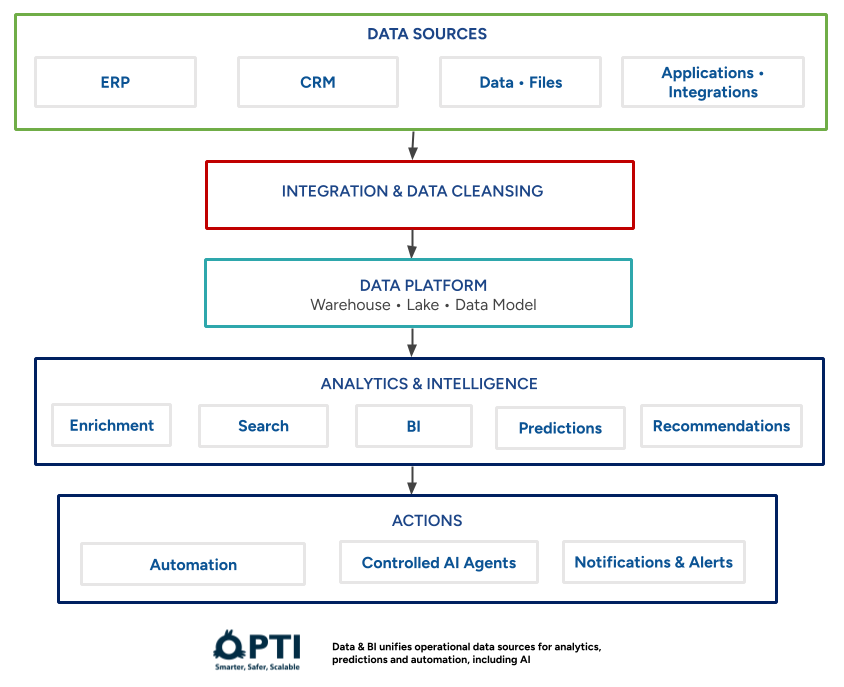
What we deliver
Data & API integration
ETL / ELT & pipelines
Data warehouse
BI & dashboards
Data quality and governance
Data for AI and RAG
Additional services
Google Cloud & Vertex AI
Automation and AI agents
HubSpot, CRM & ERP
Industries where we apply it
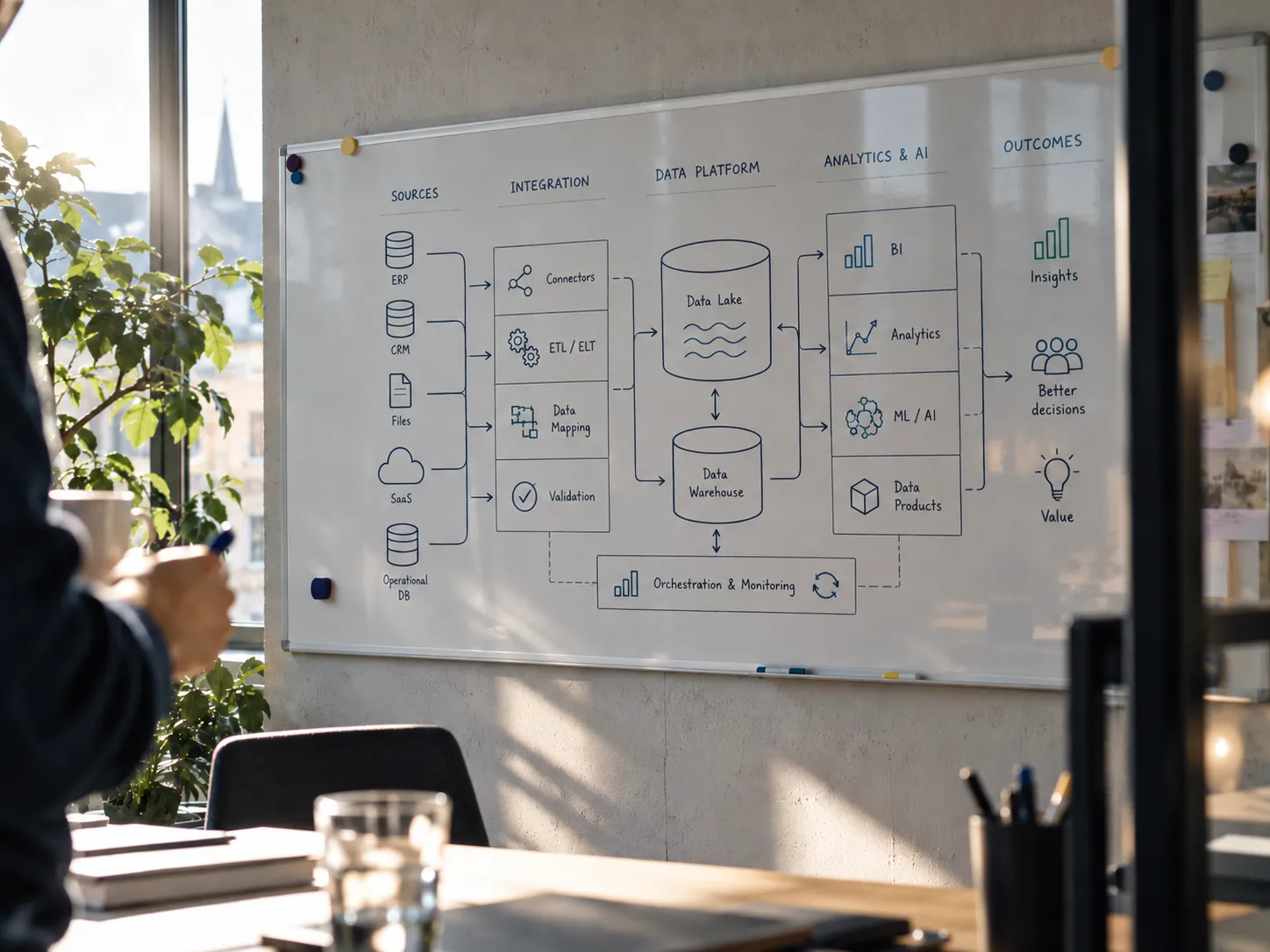
How we integrate data
Process and KPIs
Sources and the company's truth
Model and architecture
Build and validation
Analytics, AI and operations
You develop a platform or add ongoing skills
Deliver a defined data outcome
- ERP/CRM sources and KPI definitions
- ETL/ELT ingestion and API integration
- BigQuery, SQL and data modeling
- BI in Looker / Data Studio
- validation, documentation and handover
You add Data & AI capacity
- new pipelines and integrations
- BigQuery, SQL, and Dataform
- data quality and governance
- dashboards and BI reporting
- data preparation for AI and RAG
We integrate technology with existing business systems






AI Agents over On-Prem ERP: Sales, Replenishment & Pricing
Receive the material
Fill in the form and we will send the material to your email.
Quick Questions
What's the difference between SQL and NoSQL databases, and when do you recommend each?
SQL databases (e.g., MySQL, PostgreSQL) are ideal for structured data where data integrity is critical (financial transactions). NoSQL databases (e.g., MongoDB, Cassandra) are flexible, scalable, and suited for large volumes of unstructured data, such as those from modern web apps or Big Data.
What is a 'data warehouse' and why would my company need one?
A data warehouse, like Google BigQuery, is a central repository that consolidates data from multiple sources (CRM, ERP, Analytics) to facilitate analysis and reporting. It helps you get a complete view of your business and make data-driven decisions.
What Business Intelligence (BI) tools do you use for data visualization?
We primarily use Looker Studio (formerly Google Data Studio) to create interactive dashboards and visual reports. We also have experience with Tableau and other BI platforms, depending on the client's ecosystem.
Can you help me integrate data from HubSpot or Salesforce into our BI solution?
Yes, as HubSpot partners, we have extensive experience in extracting and integrating data from various CRM systems, including Salesforce, into data warehouses like BigQuery for advanced analytics.
Relevant Insights & Guides